


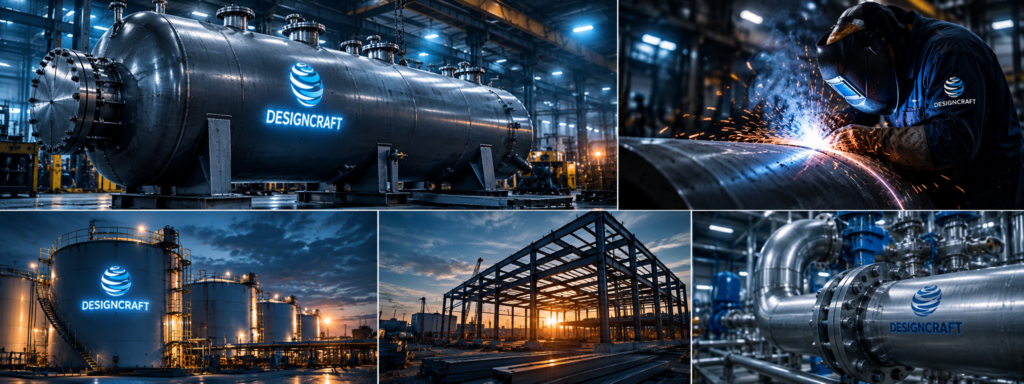

By DESIGNCRAFT LTD | Engineering Solutions
Storage tanks play a vital role in the oil and gas, petrochemical, water treatment, and industrial sectors. Proper engineering design is essential to ensure safe operation, structural integrity, environmental protection, and long-term reliability.
At DESIGNCRAFT LTD, we specialize in the engineering design and fabrication of above-ground storage tanks, delivering practical and reliable solutions tailored to industrial requirements.
1. Understanding Storage Tank Design
The design process begins by identifying the tank’s operating requirements, including:
- Storage Capacity: Determining the required volume and optimal tank dimensions.
- Stored Product: Evaluating fluid density, temperature, corrosion characteristics, and operating conditions.
- Tank Configuration: Selecting fixed-roof, floating-roof, or other suitable configurations.
- Material Selection: Choosing appropriate steel grades based on mechanical properties, corrosion resistance, and design standards.
- Environmental Loads: Considering wind, seismic activity, foundation settlement, and other site-specific conditions.
These factors establish the foundation for a safe and economical storage tank design.
2. Engineering Standards and Calculations
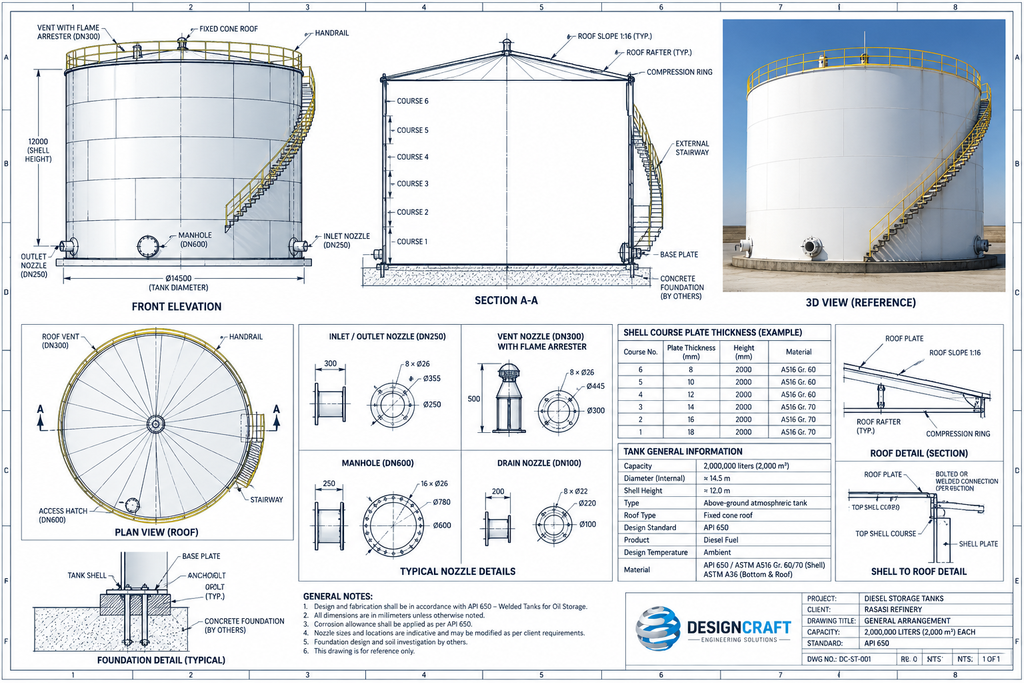
For welded atmospheric oil storage tanks, API 650 – Welded Tanks for Oil Storage is one of the most widely recognized international standards.
Engineering calculations typically include:
Shell Thickness Design: Determining the required plate thickness to withstand hydrostatic pressure, considering liquid height, density, allowable material stresses, and corrosion allowance.
Bottom Plate Design: Evaluating bottom plate arrangements, annular plates, foundation support, and settlement considerations.
Roof Design: Designing roof plates, structural rafters, compression rings, and supporting components to withstand applicable loads.
Wind and Seismic Analysis: Assessing structural stability under environmental loading conditions.
Nozzle and Connection Design: Providing suitable openings, reinforcement, manholes, vents, and piping connections.
3. Fabrication, Inspection, and Testing
Successful storage tank construction requires more than accurate engineering calculations.
Quality fabrication involves controlled plate cutting, rolling, welding, dimensional inspection, and appropriate corrosion protection.
Depending on project requirements and applicable standards, quality assurance activities may include weld examination, nondestructive testing, leak testing, and hydrostatic testing before commissioning.
4. DESIGNCRAFT LTD: From Engineering to Reality
At DESIGNCRAFT LTD, we combine engineering knowledge with practical fabrication experience to deliver industrial storage solutions.
Our capabilities include:
- API 650 storage tank engineering and fabrication
- Shell, bottom, and roof structural design
- Engineering drawings and material specifications
- Nozzle, manhole, and access platform design
- Welding, inspection, and quality control
- Surface preparation and protective coating systems
Our approach emphasizes safety, structural reliability, material efficiency, and long-term performance throughout every project.
Conclusion
Storage tank design is a multidisciplinary engineering process that combines structural analysis, material selection, fabrication technology, and international standards.
By integrating these disciplines, DESIGNCRAFT LTD aims to provide dependable storage solutions for the evolving needs of industrial facilities.
DESIGNCRAFT LTD — From Kurdistan to the World, We Deliver Excellence.
Designcraft Engineers
www.designcraftltd.com
Leave a Reply